Analysis: For AI on the iPhone, Apple Finally Bows to China's Rules
The Apple-Alibaba partnership puts the Qwen model at the heart of Apple Intelligence in China. RingkasNow's analysis: this is not just product news — it signals an era of AI fragmented along sovereignty lines, and Apple just signed on.
AI creates a new explanation from RingkasNow facts and source metadata—it does not copy or fully translate the source article.
News explanation
What happened
Key facts
Why it matters
Context
Who is involved / affected
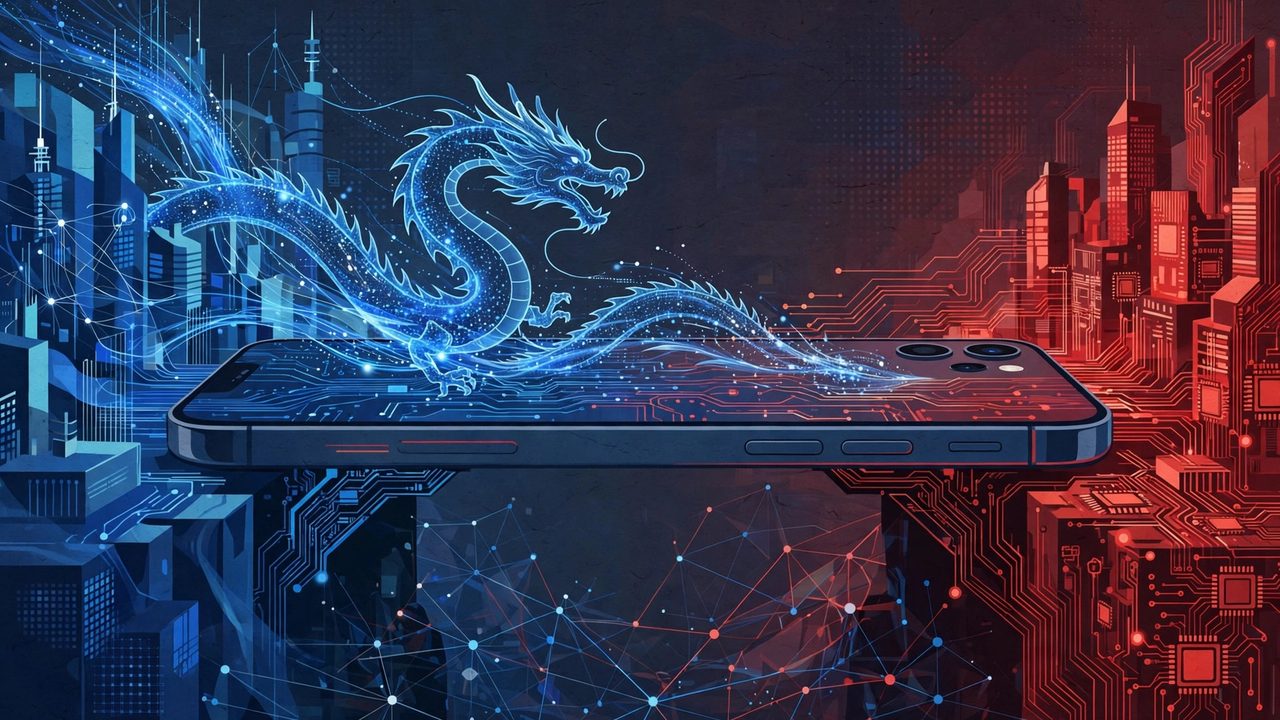
More than two years after Apple Intelligence was unveiled at WWDC 2024, iPhone users in China will finally taste Apple's AI — except it will not really be Apple's AI. Starting 4 November 2026, Alibaba's Qwen model becomes its engine, with the public rollout following via iOS 27.3 in December. The partnership announced 31 October 2026 is not mere product news; it is an open admission that in China, even the world's most valuable company must bow to local rules.
To grasp the scale of this concession, look at what Beijing demands. Chinese regulations require generative AI services to use registered domestic models. Apple needed three things at once: a local model (Qwen), a local partner (Alibaba), and official registration (the Cyberspace Administration of China registered Apple Intelligence in July 2026). Without all three, no AI on Chinese iPhones. Apple is also reportedly working with Baidu on locally required capabilities.
The partnership facts above are what is confirmed. What follows is the editorial reading of their meaning.
This is no small defeat. China is one of Apple's most important markets, and two years without AI features — in an era when AI is the key premium-phone differentiator — was a real commercial wound. Local rivals like Huawei surged back while Chinese iPhones felt like devices from the past.
But Apple's concession did not come without terms reflecting both sides' anxieties. Alibaba guarantees opt-in participation: users themselves choose whether to enable the integration. Every question, document, or image sent to Qwen requires explicit permission, and Alibaba pledges not to use user requests or responses to train its models. It is a privacy standard that rhetorically exceeds what consumer AI services usually promise.
Why would Alibaba go that far? Because the stakes are trust — and because the integration places Qwen inside the world's most prestigious phone operating system. For Alibaba, it is a global showcase: a Chinese-built model powering the AI experience on iPhones, iPads, Macs, and Vision Pros sold in China. The strategic value dwarfs any direct revenue, which was not disclosed.
There is a bigger dimension: AI sovereignty. The Apple-Qwen episode is the latest in a global trend of nations demanding control over the computing infrastructure underpinning AI. Japan, through Fujitsu, is launching the domestically built MONAKA CPU for sovereign AI infrastructure starting November 2026. The UAE is building domestic inference infrastructure for its AI-government project with OpenAI. The pattern is the same: AI is too strategic to leave entirely to foreign companies.
For Apple, the precedent is dangerous yet unavoidable. Dangerous because other markets could demand the same — imagine the EU or India requiring a "local Apple Intelligence" with domestic models. Unavoidable because the alternative, absence from the Chinese market, is commercial suicide.
Unanswered risks remain. The biggest is structural. OS-level integration is not like swapping a component supplier — it embeds deep dependence on a partner's technology roadmap and on US-China relationship stability. If Beijing tightens rules or bilateral ties sour, Apple cannot simply "switch" overnight. On the other side, Alibaba is also betting: placing Qwen at the iPhone's heart means every model shortcoming will be visible to hundreds of millions of the world's most demanding users. This partnership is a marriage of necessity — and like all such marriages, it will be tested at the first crisis.
Market context explains Apple's urgency. China is not just a big market — it is the world's most competitive premium-phone battleground, where Huawei has roared back and local players bake generative AI into every system layer. Two years without Apple Intelligence meant two years of iPhones sold with features trailing their peers. The Qwen partnership is an attempt to close that gap in one leap.
What is happening in China is an increasingly common pattern: regulation shaping product architecture. The EU's Digital Markets Act forced Apple to open up iOS; now China forces Apple to swap its AI engine. Every major jurisdiction is starting to demand a "local version" of global products — each demand adding engineering complexity Apple must maintain. Industry analysts call it sovereignty fragmentation: one product, many engines, depending on where it is sold.
The conclusion: the Apple-Alibaba partnership is a mirror of the times. The era when US tech giants could ship the same product worldwide on a single architecture is over. The future is AI fragmented along sovereignty lines — local models, local partners, local rules. Apple just signed its newest chapter, in Qwen ink.
What to monitor next
The real test begins 4 November: Qwen's quality inside Siri and Writing Tools will decide whether the two-year wait was worth it — and whether sovereignty-fragmented AI can match the experience of a single global stack.
Ask AI about this story
Something still unclear? Ask a specific question. Answers are limited to recorded source evidence.
AI may make mistakes. Check original reporting before making decisions.