Analysis: Oil Plunges More Than 7% on 2 November 2026 as US and Iran Signal Peace — Is the 8-Month War at a Turning Point?
Brent crude plunged more than 7 percent on Monday, 2 November 2026 as Tehran said contacts with the US were continuing — yet a secret US strike on Qeshm Island the same day shows peace is far from certain. RingkasNow's analysis reads this market paradox.
AI creates a new explanation from RingkasNow facts and source metadata—it does not copy or fully translate the source article.
News explanation
What happened
Key facts
Why it matters
Context
Who is involved / affected
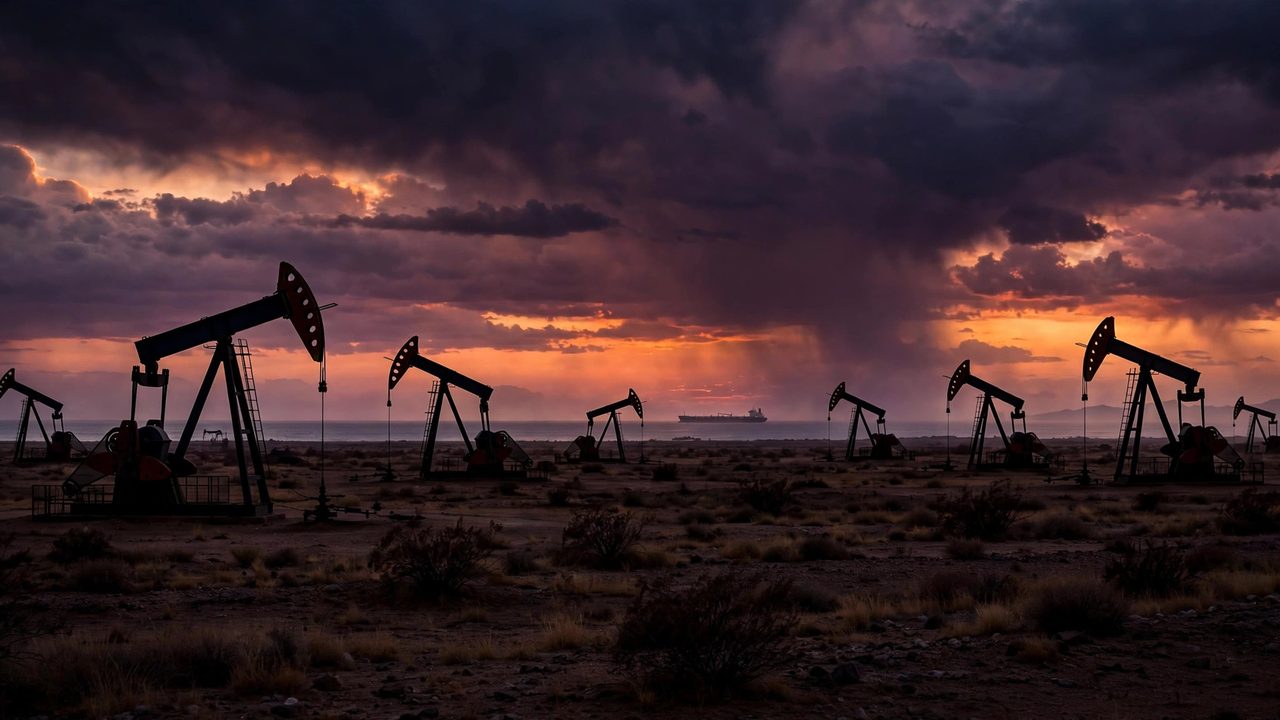
Crude oil prices plunged more than 7 percent in Monday, 2 November 2026 trading — the sharpest single-day drop in months. WTI crude sank to US$96.35 per barrel, while Brent fell to US$104.77. The trigger was not oversupply but hope: Tehran said its contacts with the United States aimed at ending the eight-month war were continuing.
This is a moment worth reading carefully, because the market is betting on a scenario that has not happened — peace — while the war is still running.
The facts on the ground point in two opposite directions. On the diplomatic side: Iran is reportedly considering a two-day plan to reopen the Strait of Hormuz, the Iranian delegation has left the Doha talks, and a draft US-Iran deal proposal is said to be circulating. Inside Iran, Mojtaba Khamenei has reportedly been granted greater authority by President Masoud Pezeshkian to continue peace negotiations.
On the military side: the Wall Street Journal reports US forces launched a secret strike on Iran's Qeshm Island on Monday — part of a series of small-scale strikes in recent weeks described by US officials as defensive. Qeshm is no ordinary target: the island at the mouth of the Strait of Hormuz is used by Iran to store ballistic missiles, hosts a naval base, and holds a desalination plant. US Central Command (CENTCOM) did not respond to confirmation requests.
Here is the paradox the market is pricing: bombs are still falling, yet prices are dropping. The market judges the probability of a diplomatic resolution now higher than the risk of escalation — at least for this week.
Why is a 7 percent drop significant? Because the geopolitical risk premium baked into oil prices over eight months of war is starting to peel off. When the market believes Gulf supplies will normalize — especially through Hormuz, which carries about a fifth of the world's daily oil consumption — futures prices adjust instantly. The knock-on effects are everywhere: the US dollar weakened to 101.76 (a one-month low) as easing energy-inflation fears pushed long-dated bond yields lower.
But honest analysis must flag three big question marks.
First, the track record. Eight months of war do not end on a single statement. The secret Qeshm strike shows Washington is still preparing military options while negotiating — a "talk while squeezing" strategy that can collapse anytime if either side misreads a signal.
Second, the deal's contents. The circulating draft proposal's contents are not public. Past conflicts show the widest gaps are in the details: verification, withdrawal timelines, security guarantees. Markets love celebrating drafts, then panic when implementation stalls.
Third, non-Iran factors. The selloff is also supported by broader macro sentiment: the US stock market is under an AI-driven selloff, the US midterms loom, and central banks in Britain, Australia, Norway, and Sweden are all announcing policy this week. The Reserve Bank of Australia is even expected to raise rates 25 basis points to 4.85 percent on Tuesday — the highest since December 2008. Part of oil's drop mirrors demand worries, not just peace headlines.
To understand why markets are so sensitive, look at the map. The Strait of Hormuz is the world's energy artery — roughly a fifth of global daily oil consumption passes through this narrow channel. When Iran discusses reopening Hormuz under a "two-day plan," the market reads de-escalation at the most vulnerable chokepoint. Conversely, the Qeshm strike — right at the strait's mouth — is a reminder the same artery can clog within hours. Oil prices are, at bottom, the price of tension in this strait.
The macro context reinforces the downward pressure. The US dollar fell to 101.76 — a one-month low — as easing energy-inflation fears compressed bond yields; the 10-year Treasury yield sits at 4.9145 percent. Meanwhile the US equity market is caught in an AI-led selloff, and this week's calendar is packed: UK, Australian, Norwegian, and Swedish central bank decisions, plus US JOLTS job openings and Friday's NFP payrolls data testing US economic resilience. Weak data would pressure oil further on demand fears — regardless of diplomatic headlines.
Three scenarios lie ahead. The peace scenario: the Doha draft is agreed, Hormuz reopens, the risk premium peels off — Brent could test US$100 or lower. The stalemate scenario: talks drag on, small strikes continue — prices drift sideways in the US$100-110 range with high volatility. The escalation scenario: a significant Iranian retaliation or a Hormuz incident — the premium returns and prices spike. Market probability currently leans toward the first, but eight months of history teach one lesson: in this conflict, a ceasefire announced Monday can be cancelled by a strike on Tuesday.
What to monitor next
What to watch next? The Doha talks and the fate of the US-Iran draft proposal are the key variables. Then the Hormuz reopening plan — if it materializes within days, the risk premium could compress deeper and Brent may test sub-US$100 levels. Conversely, one significant Iranian retaliation restores the premium overnight. The bottom line: the market is buying hope, not certainty. A 7 percent plunge mirrors optimism that the eight-month war is nearing its end — but as long as bombs fall on Qeshm while diplomats talk in Doha, that optimism is fragile. For energy watchers, this week is not about today's price but whether the draft on the negotiating table can survive contact with the battlefield.
Ask AI about this story
Something still unclear? Ask a specific question. Answers are limited to recorded source evidence.
AI may make mistakes. Check original reporting before making decisions.