
South Korean Exports Nearly Double, on the Verge of a US$1 Trillion Record
Data from South Korea's Ministry of Trade, Industry and Energy released Saturday (November 1, 2026) showed October exports of US$115.28 billion — nearly double the same period last year, according to the ministry. With January–October accumulation at US$930 billion, the annual US$1 trillion export target is projected to be reached in November, which would make Korea the fourth country in the world to break through it.
AI creates a new explanation from RingkasNow facts and source metadata—it does not copy or fully translate the source article.
News explanation
What happened
Key facts
Why it matters
Context
Who is involved / affected
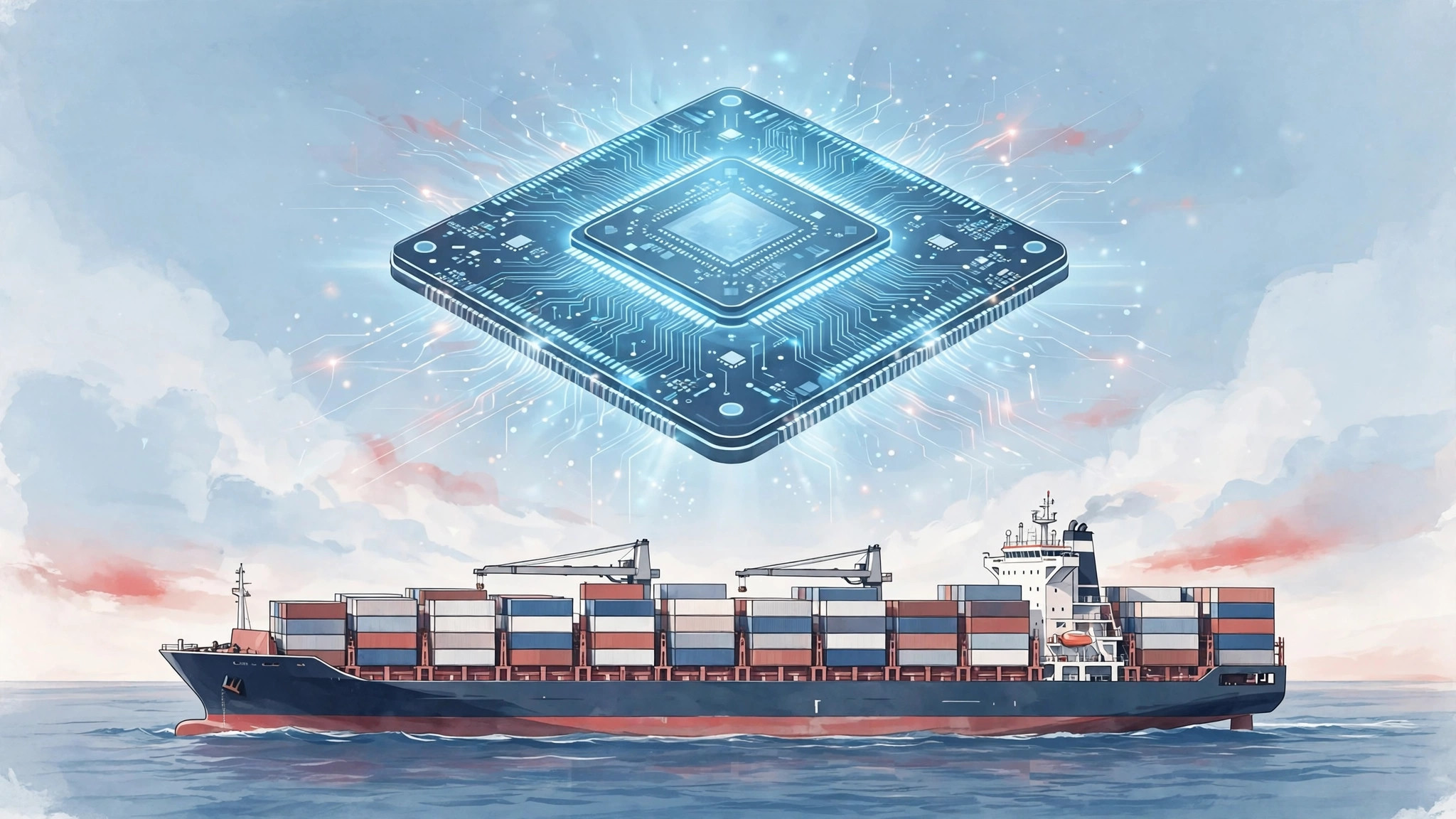
South Korea recorded an extraordinary trade performance. Official data from the Ministry of Trade, Industry and Energy released Saturday, November 1, 2026, showed October exports reaching US$115.28 billion — nearly double the same period the previous year, according to the ministry.
The largest component was semiconductors: US$56.44 billion, or about 49 percent of the month's total exports. Nearly half of everything South Korea exported in October was chips. Cumulatively, January–October 2026 exports reached US$930 billion — the first time in South Korea's history that it has broken through US$900 billion in ten months.
## Toward the US$1 Trillion Record
At this pace, the annual US$1 trillion export target is projected to be reached in November 2026. If realized, South Korea would become the fourth country in the world to break through US$1 trillion in annual exports, after the United States, China, and Germany — a historic milestone for Asia's fourth-largest economy.
President Lee Jae-myung commented on the achievement via the X platform on November 1, marking how important the trade momentum is to the Korean government and public. When a head of state personally appreciates trade data on social media, it shows exports are not just statistics — they are a matter of national pride.
## Driven by the AI Chip Boom
The main driver of this surge is no mystery: global demand for artificial intelligence (AI) chips. Korea's semiconductor giants — Samsung and SK hynix — are direct beneficiaries of the massive spending on AI data centers around the world. Beyond chips, computer exports also jumped along with demand for AI servers.
The phenomenon places South Korea squarely at the heart of the global AI revolution's supply chain. As the world's technology companies race to build AI infrastructure, Korea's chip factories are among the biggest beneficiaries.
## A Balancing Note: Concentration Risk
But the glowing figures come with a warning. The Bank of Korea has warned of the risk should AI spending in the United States slow, as reported by Reuters on October 27. The warning is relevant: with 49 percent of October exports resting on semiconductors, the Korean economy is highly sensitive to the chip industry cycle and US technology capital spending.
Dependence on a single sector of this size is a double-edged sword. On one side, it produces record after record; on the other, a sharp correction in global AI spending could reverse the situation quickly. The history of the semiconductor industry is full of sharp boom-bust cycles.
## Context: Korea's Economy Grew Faster Than Expected
This export record arrives alongside other good news from the Korean economy. The Bank of Korea's advance estimate shows South Korea's gross domestic product (GDP) grew 1.0 percent in Q3 2026 from the previous quarter — stronger than economists' median forecast of 0.7 percent. Year-on-year, GDP grew 3.4 percent, also beating the 3.0 percent expectation, as reported by CNA on October 27, 2026, and quoted by domestic media.
Even before the October data came out, January–September 2026 exports had already reached US$800 billion — surpassing the full-year record set last year. In other words, the US$1 trillion record is not just an optimistic projection, but a continuation of a trend built all year.
## Implications for the Region
For Indonesia and other Asian countries, Korea's record is an important barometer. Strong Korean exports signal that global demand — especially from the technology sector — remains very solid. But the Bank of Korea's warning also deserves policymakers' attention: diversifying export structures remains homework that must not be ignored, even amid record euphoria.
Ask AI about this story
Something still unclear? Ask a specific question. Answers are limited to recorded source evidence.
AI may make mistakes. Check original reporting before making decisions.