
G20 Foreign Ministers Leave Atlanta Without a Joint Communiqué, Miami Summit Becomes the Big Bet
The two-day G20 foreign ministers' meeting in Atlanta, Georgia, ended Saturday (October 31, 2026) without a joint communiqué — only a chair's statement from the United States. With no agreement on the Russia-Ukraine war, the Middle East, or US tariffs, hopes now rest on the leaders' summit in Miami in December.
AI creates a new explanation from RingkasNow facts and source metadata—it does not copy or fully translate the source article.
News explanation
What happened
Key facts
Why it matters
Context
Who is involved / affected
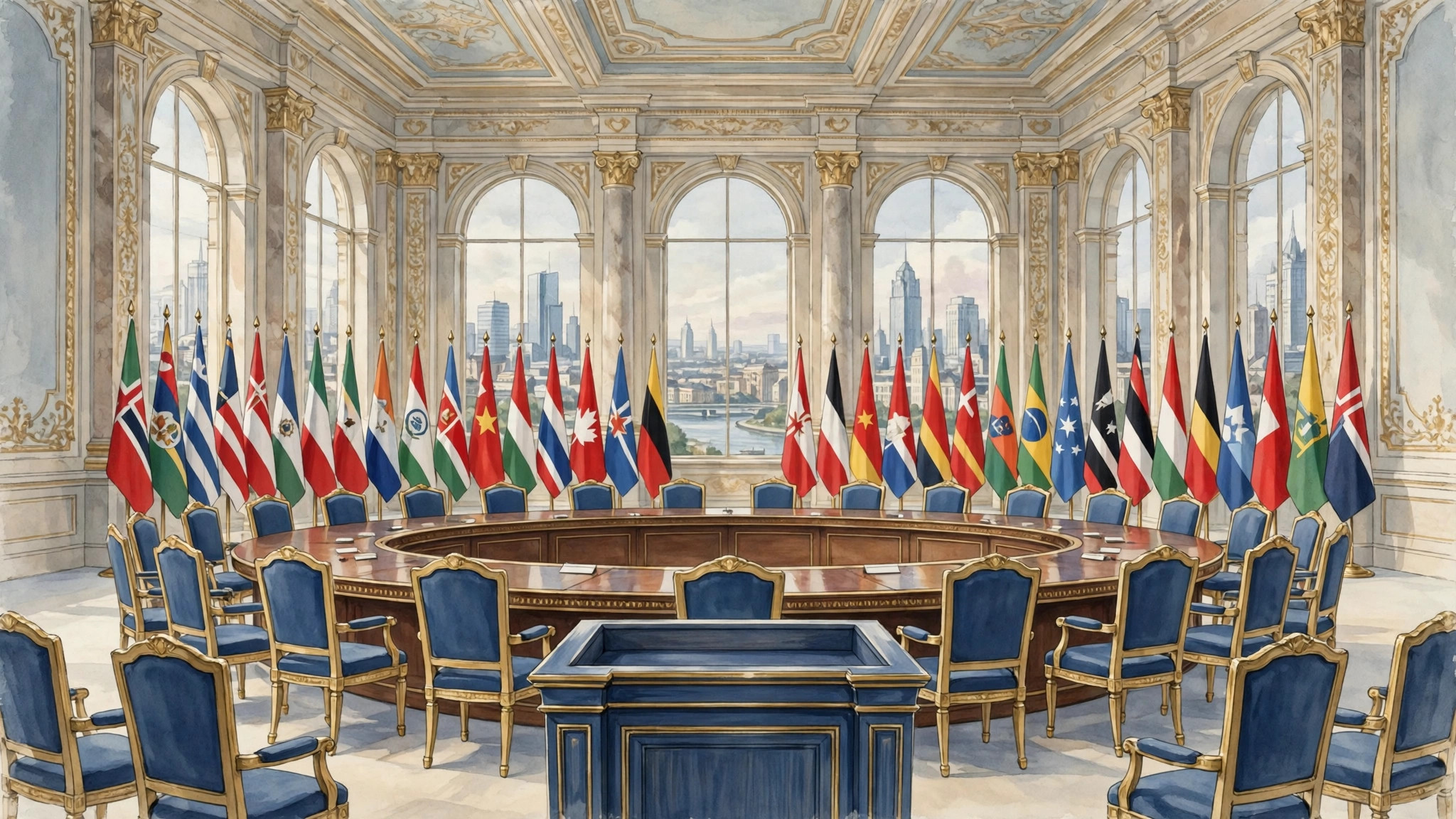
The G20 countries' foreign ministers concluded their two-day meeting in Atlanta, Georgia, on Saturday, October 31, 2026, without producing a joint communiqué. Instead, there was only a chair's statement issued by the United States as host — a format signaling that no consensus had been reached among participants.
The failure to reach a joint agreement was not without cause. Nearly the entire core agenda ended in deadlock: the Russia-Ukraine war, the Middle East situation — which, in the diplomats' framing, covers the war tensions between the US–Israel and Iran — US tariff policy, energy and food security, global supply chains, freedom of navigation, and artificial intelligence (AI) governance.
## Rubio's Frank Admission
US Secretary of State Marco Rubio made no effort to hide how difficult the negotiations were. "I'm not going to pretend to you today that we are anywhere close to finding solutions to these problems that all parties can accept," he said, in what was rendered as a faithful translation of his statement in English. The blunt statement also underscored the vast gulf of differing views among member countries.
Signs of deadlock were visible even before the meeting ended. The group photo session for the foreign ministers scheduled for Friday was canceled after European diplomats objected to the participation of Russian Foreign Minister Sergey Lavrov — which triggered threats of a boycott or walkout. Polish Foreign Minister Radosław Sikorski said the meeting's outcome had indeed been predictable, pointing to the hardness of the positions between blocs.
## Realpolitik, Not Just Failure
While it is easy to label it a "failure," the Atlanta outcome deserves to be read through the lens of realpolitik. A number of diplomats speaking on condition of anonymity revealed that participants' focus had already shifted: ensuring the G20 leaders' summit, which President Donald Trump will host in Florida on December 14–15, 2026, succeeds. A chair's statement instead of a joint communiqué, they said, had long been the planned scenario — not a last-minute surprise.
In other words, Atlanta is better understood as an honest mirror of current geopolitical conditions: the G20, designed as a forum for global economic cooperation, is now divided by deepening lines of conflict, from Eastern Europe to the Middle East, from trade wars to technology rivalry.
## Indonesia's Perspective
Indonesia attended the meeting through Foreign Minister Arrmanatha Nasir. Indonesia's Foreign Ministry said on Sunday, November 1, 2026, that Indonesia stressed the importance of national resilience as a foundation amid global uncertainty, as reported by ANTARA and quoted by domestic media.
That stance is consistent with Indonesia's longstanding diplomatic line: not to be swept up in bloc polarization, but to push resilience and practical cooperation. In a forum that could not even agree on a communiqué, a voice emphasizing resilience is a reminder of the G20's basic function — global economic stability.
## What to Watch Ahead of Miami
All eyes are now on Miami. If the foreign ministers could not even agree on a joint statement, the big question is: will the leaders be able to do better on December 14–15? The Atlanta failure could be an early warning — or it could become capital for the US host to design a more focused and realistic summit.
One thing is certain: without consensus at the ministerial level, the diplomatic burden on leaders in December will be far heavier. And for Indonesia, the Miami summit will be an important stage to keep voicing the resilience and development agenda amid an increasingly fragmented world.
Ask AI about this story
Something still unclear? Ask a specific question. Answers are limited to recorded source evidence.
AI may make mistakes. Check original reporting before making decisions.