
Ukraine Resumes Drone Strikes on Russian Oil Refineries, Defying Trump Pressure
Ukrainian drone strikes have once again hit Russian oil refineries after a pause of about two weeks — a move Kyiv made despite repeated demands from US President Donald Trump to stop the attacks over fears they would push up global fuel prices.
AI creates a new explanation from RingkasNow facts and source metadata—it does not copy or fully translate the source article.
News explanation
What happened
Key facts
Why it matters
Context
Who is involved / affected
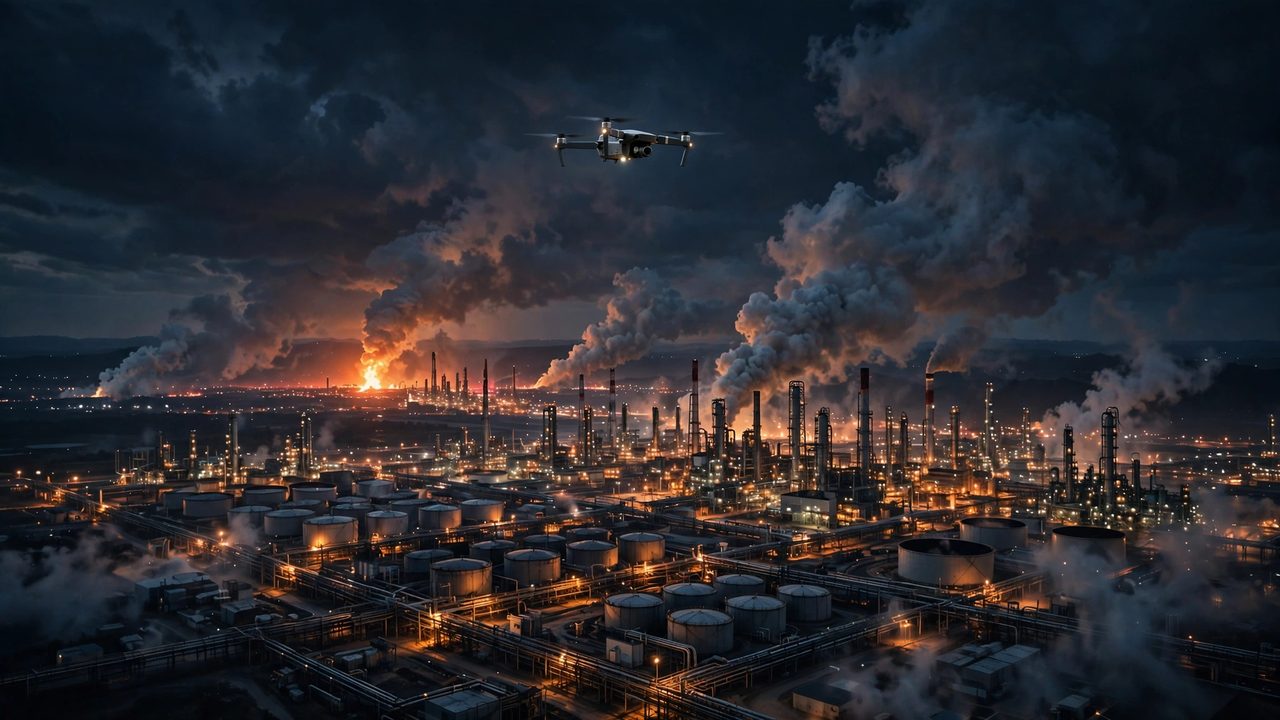
KYIV — Ukraine has resumed drone strikes on Russian oil refineries after a pause of about two weeks, ending an unofficial halt that emerged amid heavy pressure from the United States government to stop such attacks.
The strikes were reported over three consecutive nights starting 30 October 2026. Three major refineries were targeted: the Rosneft-owned Novokuybyshevsk refinery in Samara, the Bashneft-Novoil refinery in Ufa, and the LUKOIL-owned NORSI refinery in Kstovo, Nizhny Novgorod region. Their combined capacity reaches around 33 million tons per year — roughly 10 percent of Russia's total refining capacity.
The Wall Street Journal reported Ukraine had not struck Russian refineries since 15 October, and had not struck Russian oil infrastructure since 20 October, following repeated urging by US officials for Kyiv to stop.
## Kremlin: Kyiv Ignores Trump
Moscow accused Kyiv of disregarding Washington's wishes. On Friday, Russia said Ukraine had resumed strikes on its oil refineries and accused Kyiv of ignoring President Donald Trump's request to stop the attacks. Kremlin aide Yuri Ushakov said Kyiv was now "simply ignoring" US wishes.
President Volodymyr Zelensky has not officially acknowledged the latest refinery strikes — a move seemingly intended to avoid angering Washington.
## Ukraine's Position
Ukrainian officials told the Kyiv Independent they had never agreed to the US request for a 30-day pause in strikes. Kyiv says it supports a full ceasefire on energy targets — including Ukraine's own electricity grid, which is also in ruins — but Moscow is judged unwilling to agree to it.
Ukraine has long argued that long-range strikes on Russian energy infrastructure are an effort to weaken Moscow's war machine, amid the intensity of Russian attacks on Ukraine's own energy infrastructure.
## Escalation on Both Sides
The refinery strikes came alongside escalation on the other side. Reuters reported on Sunday (1/11/2026) that Russian attacks left hundreds of thousands of Ukrainians without electricity, according to President Zelensky, after Russia hit power infrastructure in four Ukrainian regions overnight.
Russian authorities, meanwhile, reported major damage to an industrial site following a Ukrainian drone strike in Nizhny Novgorod region. Governor Gleb Nikitin said the large-scale nighttime drone attack caused "significant damage" to an industrial facility in Kstovsky district — home to the NORSI refinery, one of Russia's largest.
Russia's Defence Ministry claimed its forces shot down 235 Ukrainian drones across Russian regions overnight, while Ukraine's air force said it had shot down 371 of 433 Russian long-range drones launched since Saturday night.
## Fuel Prices and the US Midterms
Trump has repeatedly blamed Ukraine's strikes on Russian refineries for high global fuel prices — although energy experts assess that high prices are driven more by other factors, including the US-Iran war. Last month, Trump even lifted US sanctions on Russian diesel.
European allies have reportedly urged Kyiv to wait until after the US midterm elections on Tuesday, 3 November 2026. Kyiv's resumed strikes ahead of the vote place Ukraine in a bold position: betting that hitting Moscow's oil revenues is worth the diplomatic cost.
Trump announced an "energy ceasefire" on 11 October and claimed both sides had agreed to it — but Russia did not confirm the deal, and Ukraine said it would continue long-range strikes if Russia refused.
## Terrorism Case and Trilateral Talks
Russian investigators have opened a criminal case on terrorism charges related to the Ukrainian drone strike on the industrial facility in Nizhny Novgorod region, according to state news agency TASS.
Trilateral talks between Russia, Ukraine, and the US are expected later this month, and the Kremlin says President Vladimir Putin is willing to speak directly with Zelensky by phone.
A six-day local ceasefire in the Russian-held city of Oleshky — mediated by US First Lady Melania Trump — also ended on Sunday, though there were no signs of fighting easing on other front lines.
Ask AI about this story
Something still unclear? Ask a specific question. Answers are limited to recorded source evidence.
AI may make mistakes. Check original reporting before making decisions.